0
Reviews
0
Likes
Optoma HD20 Reviews: See Why 0 Shoppers Rated It 0 Stars!
Everyone’s talking about the Optoma HD20 projector, but what’s the full picture? We’ve pulled 0 real reviews on these Optoma projectors — with pros, cons, and context.
 Supermod
 Moderator
46
Points

The Optoma HD20 has been discontinued️.
Our community last shared an update on
January 15, 2026.
 Recaptor
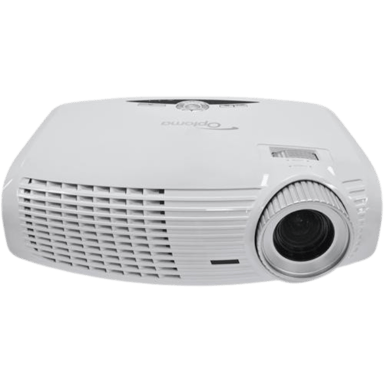
Optoma HD20: A Robust 1080p Home Theater Projector Built for Classic Performance
When exploring the home theater projector space, finding a product that balances image quality, brightness, and ease of use is crucial. The Optoma HD20, introduced in 2009, stands as a solid contender for anyone seeking a dedicated home theater projector designed specifically for immersive viewing experiences. With full HD native resolution and respectable brightness specifications, this projector aims to provide clear, vibrant images for home cinematic setups. But does it really live up to its numbers in a competitive market? Let's unpack the details according to the specs.Detailed Specs & Features
Based on its engineering data, the Optoma HD20 projects at a 1080p resolution, which is still highly relevant for home theaters focused on full HD content. The native resolution of 1080p ensures sharpness and detail that typical HD projectors often fall short of. Its projection technology leverages DLP chip technology, using a 0.65-inch imaging chip that contributes to reliable, consistent image delivery. Brightness is a significant factor for any projector, and here, the HD20 boasts an output of 1700 ANSI lumens. While not the brightest projector on the market, this level is adequate for a controlled lighting environment, such as a dedicated home theater room, where ambient light can be minimized. The contrast ratio reaches up to 4000:1, which enhances the depth of blacks and helps images feel more dynamic. The throw ratio range of 1.5-2.5+ means the projector is intended for medium to long-throw placement, with a minimum throw distance of 5.2 feet and a maximum of 32.8 feet. This suits a variety of room sizes, especially when ceiling-mounted or placed on a tabletop as supported (see mounting type). Keystone correction is limited to vertical adjustment only (5 degrees), which may require some manual setup to align images perfectly. On the optical side, it uses a glass lens with manual focus. Note that autofocus or advanced lens shift features are not present, which reflects its age but also means users will have to fine-tune focus manually. The projector's lamp light source delivers a power output rated at 180 watts, with an expected life of 3000 hours under normal mode and 4000 hours in eco mode, providing decent longevity before lamp replacement is needed. Replacement is user-accessible, an important aspect of maintenance. Connectivity is pragmatic rather than expansive: two HDMI 1.4 ports, a VGA input, composite inputs, and a 3.5mm audio out ensure compatibility with most sources without fuss. Notably, there is no USB or wireless connectivity, emphasizing its focus on straightforward home theater setups rather than smart functionality or streaming integration. Overall, these specifications paint a portrait of a sturdy home theater projector that aims to meet essential viewing needs with clarity and consistency.User Experience & Performance (Based on Specs)
Design & Build
Constructed with a plastic chassis and weighing about 6.4 pounds, the Optoma HD20 is lightweight enough for flexible placement but solid enough for stationary setups. Its dimensions (3.82 inches wide, 12.76 inches deep, 9.21 inches high) lend it a slim but elongated profile. The side ventilation system helps maintain standard cooling efficiency during prolonged use. Though there's no carry handle or tripod mount compatibility, it supports both tabletop and ceiling installations, which adds versatility for custom home setups.Performance
Regarding visual output, the projector's 1700 ANSI lumens combined with a contrast ratio of 4000:1 provide a balanced viewing experience with decent black levels enhanced by black-level enhancement technology. However, it lacks HDR support and frame interpolation so that it won't handle ultra-smooth motion or HDR content natively - an expected limitation for its release period and price positioning. The fixed 60 Hz refresh rate targets standard video playback rather comfortably. Still, users sensitive to fast action scenes might notice some motion artifacts due to the absence of motion processing and frame interpolation features. The 8-bit color depth and 100% color gamut coverage promise color accuracy close to HDTV standards (Rec709 calibration), suitable for cinematic appreciation.Extra Features
This projector opts for simplicity; no operating system, app support, voice control, or wireless casting are present. Software updates are completed via USB, requiring a bit of manual intervention. The audio system includes a 2-watt mono speaker, suitable only for basic sound needs, recommending users consider external audio solutions for high fidelity. Buttons on the control panel and a backlit remote (without backlit buttons) provide straightforward control. User custom preset modes and auto source detection add helpful usability touches. The fan noise comes in at a reasonable 34 dBA, low enough for an unobtrusive viewing experience.Pros & Cons
Pros
- True 1080p Native Resolution Delivering Crisp Images
- Bright 1700 ANSI Lumens Suitable for Controlled Lighting Environments
- Flexible Mounting Options With Tabletop and Ceiling Compatibility
- User-Replaceable Lamp with Decent Lifespan
Cons
- No Advanced Image Processing Like HDR or Frame Interpolation
- Limited Keystone Correction Only Vertically by 5 Degrees
- No Wireless Connectivity or Smart Features
- Basic Mono Speaker Output, Not Suitable for Quality Audio
Price & Value for Money
Currently priced at $825 at Michaels, the Optoma HD20's cost may seem steep considering its age and limited smart features. However, given its 1-year warranty, solid lamp power output, and true full HD imaging capabilities, the price aligns with users seeking a durable, straightforward projector without the bells and whistles of modern smart projectors. For dedicated cinema fans who prioritize picture clarity over newer connectivity gimmicks, it offers measurable benefits justifying the investment. Conversely, casual users wanting smart streaming out of the box may want to look elsewhere.Quick Take
In short, the Optoma HD20 shines with its genuine 1080p resolution and respectable brightness that caters to home theater enthusiasts aiming for sharp, vibrant images. If we look at the numbers alone, it's a dependable classic-level projector with limited smart functionality but strong foundational performance.Closing Recommendation
This projector may be ideal for users who own or plan to build a home theater with controlled lighting conditions and value image quality above convenience features. It appears to perform best for those with a moderate budget seeking a no-nonsense projector that helps users achieve crisp, accurate 1080p visuals without relying on wireless or app integration. Its lamp replaceability and ceiling mount compatibility contribute to long-term usability in fixed installations.Verdict
Rating: Based on the specifications and overall feature set, we believe Optoma HD20 deserves 4.1 out of 5.
- Winner Feature => True 1080p resolution with solid brightness and contrast ratio for home theaters.
- Needs Improvement => Lack of modern smart features, wireless connectivity, and limited keystone correction reduces ease of use.
Reviews 0
The good, the bad, and the brutally honest.Average Rating

0
/ 5
0 Reviews
More Projectors 972
Unlock more awesome finds.
48
Points

46
Points
52
Points

50
Points
51
Points


